
Mori · licensed hairdresser, 8 years in Tokyo & Shanghai, specialising in Japanese straightening.
Matching a product to a hair type was the job. That is what this article is.
The Question Nobody Answers Properly
You’ve seen the Japanese hair dryers. The Panasonic Nanocare that Japanese beauty forums treat as the gold standard, the one that supposedly leaves hair glossier than anything sold in a US store. It’s on Amazon. It costs several hundred dollars. And the listing says something about 100V.
Here’s what almost every roundup skips: the flagship Japanese Nanocare will not work properly in a US outlet. Not “might have reduced performance” — it runs on the wrong voltage, and plugging it straight into a US socket shortens its life and creates a genuine safety risk.
That doesn’t mean don’t buy it. It means the real decision is a three-way choice, and the price you see on the listing isn’t the price you’ll actually pay.
This guide covers what’s genuinely available, what the voltage situation actually requires, and which of the three Panasonic options fits your situation.
If you are also weighing ReFa or KINUJO against Panasonic, the 2026 Japanese hair dryer comparison sorts all three brands by the same voltage rule.

⏱️ In a hurry? Our Top Pick: Panasonic EH-NA67 Nanoe Salon Hair Dryer — the US-voltage model. You plug it in and it works, it carries the same nanoe moisture technology, and it has over 1,300 ratings behind it rather than a handful. For most people this is simply the correct answer. 👉 Check Price on Amazon →
Quick Comparison
| Model | Voltage | Best For | Ratings | Price | Where to Buy |
|---|---|---|---|---|---|
| Panasonic EH-NA67 Nanoe Salon | US — plug and go | Everyday full-size use | 4.5★ · 1,351 | $$ | Check Price on Amazon |
| Panasonic EH-NA27-K Nanoe Compact | US — plug and go | Travel, small bathrooms, fine hair | 4.5★ · 1,662 | $ | Check Price on Amazon |
| Panasonic EH-NA0J Nanocare | 100V Japan only — transformer required | Enthusiasts who want the flagship | 4.8★ · 21 | $$$$ | Check Price on Amazon |
Price bands: $ budget · $$ mid-range · $$$$ flagship import. Amazon pricing on imported models moves a lot — check the live listing.
The Voltage Problem, Explained Properly
This is the section that decides your purchase, so it’s worth two minutes.

Japan runs on 100V. The United States runs on 120V. That 20% difference sounds small. For a hair dryer, it isn’t.
A hair dryer is mostly a heating element and a motor. Feed a 100V heating element 120V and it draws more current than it was designed for. The element runs hotter, the motor spins faster, and the thermal cutoff works harder than the engineer intended. Some units survive for a while. Some fail early. Neither outcome is what you paid several hundred dollars for.
What a transformer actually costs you
The fix is a step-down transformer that converts 120V down to 100V. But hair dryers are the hardest appliance to transform, for a specific reason:
Heating appliances draw two to four times their rated wattage at startup. A 1,200W dryer can pull well over 2,000W in the first instant. Undersized transformers overheat, and the standard guidance for hair dryers is a transformer rated around 3,000W — you want headroom of at least 50% over the appliance’s rating, and heating elements eat that headroom immediately.
A 3,000W step-down transformer is not a travel adapter. It’s a heavy metal box that costs roughly as much as a mid-range hair dryer, and it lives on your bathroom counter permanently.
So the real cost of the flagship import is the dryer plus a transformer. Budget for both or don’t buy it.
The one case where it makes sense
If you already own a step-down transformer — because you brought back a Japanese rice cooker, turntable, or other 100V appliance — the marginal cost disappears and the flagship becomes a reasonable buy. Otherwise, the US models exist precisely to solve this problem.
Detailed Reviews
1. Panasonic EH-NA67 Nanoe Salon — Best Overall
Best For: Everyday full-size drying, US voltage, no accessories required
The EH-NA67 is Panasonic’s full-size nanoe dryer built for the US market. It carries the moisture technology the Japanese line is known for, in a body that plugs into your wall without an adapter, a transformer, or a compromise.
What it does: nanoe technology generates fine moisture-carrying particles during drying, which is the mechanism behind the “hair feels conditioned afterwards” reports rather than the raw heat output. It ships with a diffuser and a concentrator, plus an oscillating quick-dry nozzle that moves the airflow so you’re not holding one hot spot against your hair.
Pros: – US voltage — no transformer, no risk, no extra purchase – Over 1,300 ratings at 4.5 stars, so the reliability picture is real rather than anecdotal – Diffuser included, which matters if your hair is wavy or curly – The oscillating nozzle genuinely reduces the “one hot spot” problem
Cons: – Not the flagship. Panasonic reserves its newest nanoe generation for the Japanese domestic line – Full-size and not especially light — this is a counter dryer, not a suitcase dryer – Fewer heat and speed settings than professional salon dryers
Skip it if: you travel constantly and need something that folds.
👉 Buy Panasonic EH-NA67 on Amazon →
2. Panasonic EH-NA27-K Nanoe Compact — Best for Travel & Fine Hair
Best For: Travel, small bathrooms, fine hair that doesn’t need 1,800W
The EH-NA27-K is the compact nanoe model — a 1,400W folding-handle dryer that carries the same core technology in a much smaller body.
What it does: the same nanoe moisture approach as the EH-NA67, at lower wattage and in a folding form factor. It includes a quick-dry nozzle for faster drying despite the smaller motor.
Pros: – Folding handle — it actually fits in a carry-on – US voltage, so it works at home and anywhere in North America – 1,662 ratings at 4.5 stars — the most-reviewed option here – The lowest price of the three, by a wide margin – 1,400W is plenty for fine or shoulder-length hair
Cons: – Underpowered for thick, coarse, or very long hair — you’ll be drying for a while – No diffuser included, which matters for curly hair – Smaller motor means more noise per unit of airflow
Skip it if: your hair is thick or below shoulder length and you dry it daily. You’ll resent the wattage.
👉 Buy Panasonic EH-NA27-K on Amazon →
3. Panasonic EH-NA0J Nanocare — The Flagship Import
Best For: People who already own a step-down transformer, or are moving to Japan
The EH-NA0J is the dryer the Japanese beauty press writes about. High-penetration nanoe plus mineral ions, the top of Panasonic’s domestic line, and the reason people search for “Japanese hair dryer” in the first place.
What it does: a higher-density nanoe output than the export models, combined with mineral ion emission aimed at cuticle smoothness. The Japanese domestic line gets Panasonic’s newest generation first, and this is that generation.
Pros: – The genuine flagship — not an export variant – 4.8 stars, the highest rating of the three – Noticeably different finish on the hair according to owners, particularly on longer hair – If you’re relocating to Japan or already run 100V appliances, it’s the obvious choice
Cons: – 100V only, and shipped from Japan. It will not work correctly in a US outlet without a transformer – Requires a ~3,000W step-down transformer — a heavy, expensive, permanent counter fixture – Only 21 ratings, so the long-term reliability picture in US conditions is thin – Shipping from Japan means longer delivery and a harder returns process – The most expensive option before you’ve bought the transformer
Skip it if: you don’t already own a step-down transformer. The total cost stops making sense.
👉 Check Panasonic EH-NA0J on Amazon →
Which One Should You Buy?
You live in the US and just want the Japanese drying experience → Panasonic EH-NA67. Plug it in, use it, done. 👉 Check Price on Amazon →
You travel often, or your hair is fine and shortish → Panasonic EH-NA27-K. Folds, cheapest, same core technology. 👉 Check Price on Amazon →
You already own a step-down transformer, or you’re moving to Japan → Panasonic EH-NA0J. This is the only situation where the flagship is the rational buy. 👉 Check Price on Amazon →
Your hair is thick, coarse, or curly → EH-NA67, and use the included diffuser. The compact model doesn’t have the airflow, and importing the flagship doesn’t solve an airflow problem.
Does a Dryer Actually Matter More Than Your Shampoo?
Honest answer: for most people, no — not first.
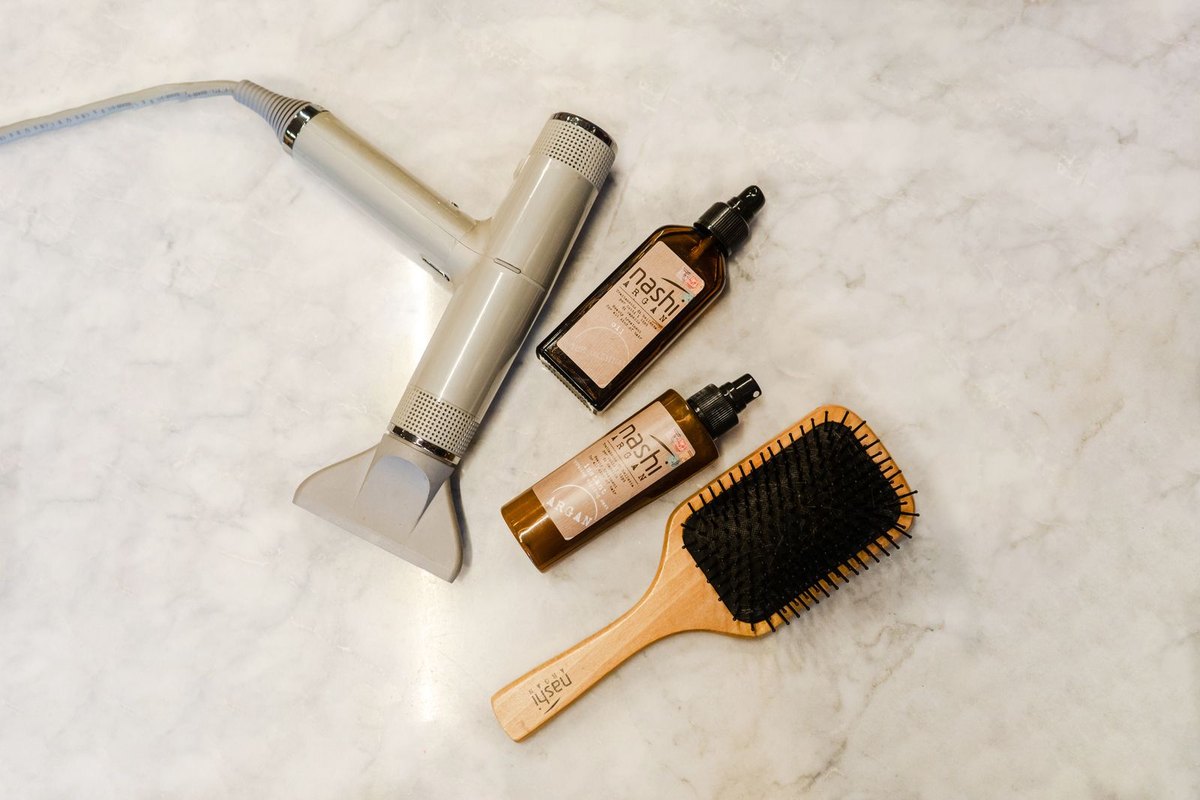
Heat damage is real, and a moisture-emitting dryer measurably reduces it. But if your hair is dry, frizzy, or breaking, the wash step is doing more damage than the drying step, and it’s a fraction of the cost to fix.
The sensible order is: fix the shampoo, then upgrade the dryer. Our Japanese shampoo comparison covers the wash step, and if frizz is your specific complaint, the curly hair and frizz guide is the one to read — the conditioner pairing section there solves more frizz than any dryer will.
If your scalp is the problem rather than your hair, start with our scalp care guide instead.
If you are weighing the imports against each other rather than against Panasonic, the ReFa vs KINUJO section of the dryer guide puts the two side by side on weight, airflow and how each one handles heat.
Weighing a Dyson against a Japanese dryer instead? The ReFa vs Dyson guide covers the Supersonic Nural, Origin and Travel against ReFa SMART W, including which ones plug straight into a US outlet.
FAQ
Can I use a Japanese 100V hair dryer in the US without a transformer? You can physically plug it in — the plug shape is the same. You shouldn’t. The appliance is designed for 100V and a US outlet supplies roughly 20% more, which runs the heating element and motor beyond their design point. It may work for a while. It is not safe practice and it is not covered by any warranty you can realistically claim.
What size transformer do I need for a Japanese hair dryer? Larger than you’d expect. Heating appliances draw two to four times their rated wattage at startup, and the standard advice is a step-down transformer rated around 3,000W with at least 50% headroom over the dryer’s rating. Undersized transformers overheat. This is why the flagship import is a two-purchase decision.
Is the Japanese domestic Nanocare actually better than the US nanoe models? The domestic line gets Panasonic’s newest nanoe generation first, and the flagship emits at a higher density. Owners do report a different finish, especially on longer hair. Whether that difference justifies the price plus a transformer is a personal call — for most people, it doesn’t.
Will a Japanese dryer work in Japan if I buy the US model? No, in the reverse direction the problem is smaller but still real: a 120V appliance on 100V will underperform — less heat, weaker airflow — rather than being damaged. If you’re splitting time between both countries, buy for wherever you dry your hair most.
Is nanoe just marketing? It’s a real mechanism — the dryer emits fine moisture-carrying particles during drying — and it’s the reason these dryers finish hair differently from a pure hot-air dryer. It is not a substitute for a good wash routine, and it will not repair damage that’s already there.
Which is quieter? The full-size EH-NA67. The compact model produces less airflow from a smaller motor, which means more noise per unit of drying done, and you’ll run it longer.
The Bottom Line
The Japanese hair dryer worth buying, for almost everyone reading this in the US, is the Panasonic EH-NA67 — the US-voltage nanoe model. It has the technology, it has a real body of reviews, and it works when you plug it in.
The flagship EH-NA0J is a genuinely better dryer and the wrong purchase for most people, because the transformer it requires costs and weighs more than most buyers expect. Buy it only if you already run 100V appliances.
And if you’re buying a dryer to fix dryness, frizz, or breakage — buy the shampoo first. It’s a tenth of the price and it addresses the step that’s causing the damage.