
Mori · licensed hairdresser, 8 years in Tokyo & Shanghai, specialising in Japanese straightening.
Matching a product to a hair type was the job. That is what this article is.
Almost every article about frizz is half an article.
They tell you which shampoo to buy, and stop. But frizz is not created in the shower — it is created in the ten minutes after it. You can use a perfect shampoo, rub your hair with a towel, aim a hot dryer at it from below, and have frizz by the time you leave the house.
So this covers both halves. The four Japanese shampoos worth buying, and then the part that actually decides whether they work.
⏱️ In a hurry?
Wash → &Honey Deep Moist with its matching conditioner — the heaviest pair at drugstore price
Dry → Panasonic Nanoe EH-NA67 — dries faster at a lower temperature, and comes with a diffuser
Free → stop rubbing it with a towel, and aim the airflow
downwards
What Frizz Actually Is
Frizz is not a hair type. It is a cuticle that is lifted, on a strand that is exchanging moisture with the air.
The cuticle is a layer of overlapping scales, like roof tiles. When they lie flat, the strand is smooth and reflects light. When they lift, three things happen at once: the strand looks dull, it catches on its neighbours instead of lying beside them, and humidity moves in and out of the shaft freely — which is why frizz is worse on damp days.
So everything that helps comes down to one goal: get the scales to lie flat and keep them there.
That gives you two levers.
| Lever | What it does |
|---|---|
| What you wash with | Keeps the hair hydrated enough that the cuticle is not lifted by dryness |
| How you dry it | Physically lays the scales down — or lifts them |
Most people optimise the first and sabotage the second.
Part 1: What to Wash With
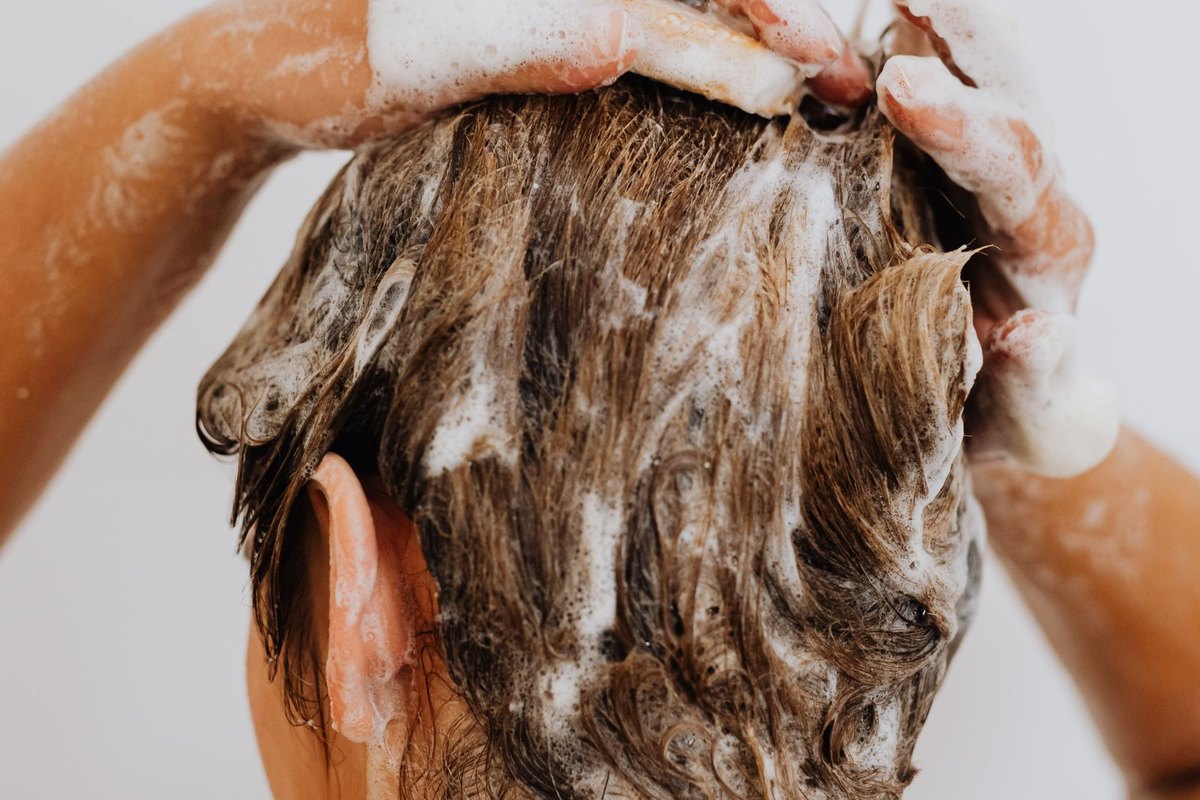
The rule for frizz is simple and most shoppers get it backwards: go heavier than you think. Frizz-prone hair is dry hair, and light “smoothing” formulas do not put enough back.
| Product | Weight | Best for | Price | Where to buy |
|---|---|---|---|---|
| &Honey Deep Moist | Heaviest | Coarse, thick, very frizzy | $$$ | Check Price on Amazon |
| Milbon Moisture Replenishing | Medium-heavy | The safe answer, any frizz | $$$$ | Check Price on Amazon |
| Tsubaki Premium Moist & Repair | Medium | Frizz from damage rather than dryness | $$ | Check Price on Amazon |
| BOTANIST Botanical (Damage Care) | Light-medium | Fine hair that frizzes | $$ | Check Price on Amazon |
Price bands: $$ mid-range · $$$ premium · $$$$ salon tier. Amazon pricing moves — check the live listing.
Frizz from dryness, or frizz from damage?
These need opposite products, and they feel identical. Pull one strand and stretch it gently: snaps immediately means damage, and you want Tsubaki; stretches and returns means dryness, and you want &Honey. Our Tsubaki vs &Honey comparison goes deeper.
The conditioner matters more than the shampoo
For frizz-prone hair this is not a slogan. The shampoo cleans; the conditioner is what lays the cuticle down.
&Honey Deep Moist Conditioner for the heaviest routine, Milbon’s conditioner for the salon-tier one, and Fino Premium Touch Hair Mask once weekly on top of either.
Never pair a light shampoo with a light conditioner. Our conditioner guide has the full pairing table and the application technique, which matters more than the bottle.
👉 Check &Honey Deep Moist on Amazon →
Part 2: How You Dry It
This is the half that is missing from almost every frizz article, and in my experience it accounts for more of the result than the shampoo does.
Air drying is not the gentle option
People assume letting it dry naturally is kindest. For frizz it is usually the worst choice.
Hair is swollen and the cuticle is raised the entire time it is wet. The longer it stays wet, the longer the scales stay open — and they dry in whatever position they were left in. Air drying maximises that window.
Drying it properly, and reasonably quickly, closes the cuticle sooner.
Aim the airflow downwards. Always
This is the single technique that changes the most, and it costs nothing.
The cuticle scales point downwards, from root to tip. Blow air up the strand and you are lifting every scale against its grain. Blow it down and you are pressing them flat.
Point the nozzle down the length of the hair, following the direction it grows. Most people wave the dryer around at whatever angle is comfortable, which means half the time they are actively creating the frizz they are trying to remove.
A concentrator nozzle exists for exactly this — it lets you direct the airflow instead of spraying it everywhere.
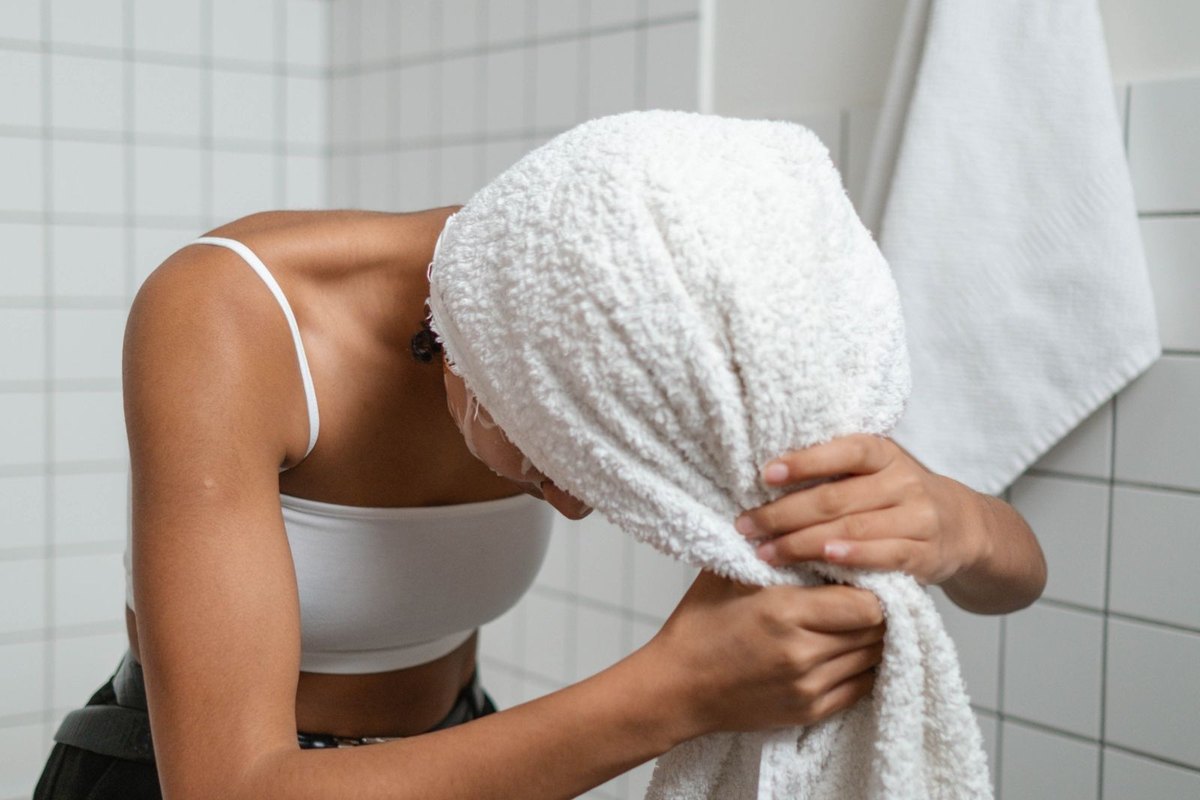
Squeeze with the towel. Do not rub
Rubbing a terry towel against a swollen wet cuticle is abrasion, plainly. Every pass lifts scales.
Squeeze and blot instead, with a microfibre towel or a cotton T-shirt. This is free and it is one of the two biggest wins on this page.
Curly or wavy? Use the diffuser
A diffuser spreads the airflow so it dries the hair without blasting the curl clumps apart. Without one, a concentrated jet separates the clumps and every separated strand becomes frizz.
If your hair has any wave to it, a dryer without a diffuser is working against you.
Do not touch it while it dries
Hair sets as it dries. Every touch while damp breaks the surface you are trying to form. Get it into position, dry it, leave it.
The Dryer: Where Japanese Products Actually Lead
Japanese dryers are built around one idea — dry the hair faster at a lower temperature, and put moisture back while doing it. For frizz that is precisely the right target, because heat damage and long wet windows both lift the cuticle.
Panasonic’s nanoe range is what most Japanese salons use.
| Model | Best for | Note | Where to buy |
|---|---|---|---|
| Panasonic Nanoe EH-NA67 | Most people — start here | Includes a diffuser and concentrator. International voltage | Check Price on Amazon |
| Panasonic EH-NA27-K Compact | Fine hair, travel | Folding handle, lighter | Check Price on Amazon |
| Panasonic EH-NA0J Nanocare | The flagship | ⚠️ 100V, Japan domestic model — see below | Check Price on Amazon |
For frizz specifically, the EH-NA67 is the one I would buy. It ships with both a diffuser and a concentrator, which are the two attachments that make the technique above possible, and it runs on international voltage.
⚠️ The voltage trap. The flagship EH-NA0J is a Japanese domestic model built for 100V. The US runs 120V, and hair dryers draw two to four times their rated wattage at startup — a travel adapter will not do it, and a cheap transformer will not either. Our full dryer guide explains when a step-down transformer is worth it and when it absolutely is not.
👉 Check Panasonic Nanoe EH-NA67 on Amazon →
If You Are Going to Use a Flat Iron Anyway
I would rather you did not, and I say that as someone who ironed hair professionally for eight years. But plenty of people will, so here is how to do it with the least cost.
The plates matter more than the brand. Rough or sticky plates drag, and drag is friction against a heated cuticle. Japanese silk-plate irons like the KINUJO W are built specifically around low-friction glide, and the worldwide model handles international voltage.
And the technique matters more than the plates. Do not clamp hard and drag the length in one long pull. Set, release, move down, set again — short passes, no tension. Straightness comes from heat and flat plates, not from pulling.
That is the same principle that decides how much damage a salon straightening treatment does, and I have written up the mechanics in why Japanese straightening damages hair.
Building the whole kit? We have ranked every Japanese curly-hair product by how much it actually changes the result, at three budgets — see Japanese Curly Hair Products.
FAQ
What is the best Japanese shampoo for frizzy hair? &Honey Deep Moist for most frizz, because frizz-prone hair is dry hair and &Honey is the heaviest drugstore option. Milbon if you would rather not gamble.
Will shampoo alone stop frizz? No, and this is why people conclude a good product “did nothing.” How you dry it decides at least as much. Start with the towel and the airflow direction — both are free.
Is air drying better for frizzy hair? Usually not. The cuticle stays lifted the whole time the hair is wet, so a long air-dry keeps the scales open longer. Dry it properly instead.
Do I need a diffuser? If your hair has any wave or curl, yes. A concentrated jet blows the curl clumps apart and each loose strand becomes frizz. The EH-NA67 includes one.
Can I use a Japanese dryer in the US? Only some of them. Models sold internationally are fine; Japanese domestic models are 100V only and need a substantial transformer. See our dryer guide.
Is my frizz from dryness or damage? Stretch one strand. Snaps quickly means damage; stretches and returns means dryness. They need opposite products — see Tsubaki vs &Honey.
What about curly hair specifically? Frizz and curl overlap but are not the same problem. Our curly hair guide covers weight and clumping, which matter more when the hair is curly.
The Bottom Line
Frizz is a lifted cuticle. Everything that works either keeps it hydrated or lays it flat.
Wash – Coarse, thick, very frizzy → &Honey Deep Moist + its conditioner – Do not want to gamble → Milbon Moisture Replenishing – Frizz from damage, not dryness → Shiseido Tsubaki – Fine hair → BOTANIST
Dry – Panasonic Nanoe EH-NA67 — diffuser included, international voltage
Free, and worth more than any of it – Squeeze with the towel, never rub – Aim the airflow downwards, following the way the hair grows – Do not touch it while it dries
Get those three right and a mid-range shampoo will outperform a salon one used carelessly.
About the author
Mori spent eight years as a licensed hairdresser — two in Shanghai at the Isetan salon, six in Tokyo — specialising in Japanese hair straightening (shukumo kyosei). He no longer works behind a chair but still holds the licence, and lives in Japan.
This article is based on professional knowledge of hair and formulation, plus aggregated customer reviews. It does not claim personal testing of every product. More about how this site works →