
Mori · licensed hairdresser, 8 years in Tokyo & Shanghai, specialising in Japanese straightening.
Matching a product to a hair type was the job. That is what this article is.
For curly hair, the conditioner does more work than the shampoo. The shampoo cleans. The conditioner is what defines the curl, seals the cuticle, and decides whether you have frizz by lunchtime.
Most curly-hair advice stops at “use a good conditioner.” That is not the useful half. Where you put it, how wet your hair is, and how much you rinse out matter more than which bottle you buy — and almost nobody explains that part.
Here are the four Japanese conditioners worth your money, and then the technique that decides whether they work.
⏱️ In a hurry?
The safe answer → Milbon Moisture Replenishing Conditioner
Tightest curls, driest hair → &Honey Deep Moist Conditioner 2.0
Once a week, on top of either → Fino Premium Touch Hair Mask
Quick Comparison
| Product | Weight | Best for | Use | Price | Where to buy |
|---|---|---|---|---|---|
| Milbon Moisture Replenishing Conditioner | Medium-heavy | The safe default for most curls | Daily | $$$$ | Check Price on Amazon |
| &Honey Deep Moist Conditioner 2.0 | Heaviest | Coily, very dry, thick | Daily | $$$ | Check Price on Amazon |
| Tsubaki Premium EX Intensive Repair Treatment | Medium | Curly and damaged or coloured | Daily | $$ | Check Price on Amazon |
| Fino Premium Touch Hair Mask | Deep treatment | Weekly reset, not a daily | 1× weekly | $$ | Check Price on Amazon |
Price bands: $$ mid-range · $$$ premium · $$$$ salon tier. Amazon pricing moves — check the live listing.
Curly Hair Is Dry Because of Its Shape, Not Because You Neglected It
This is worth understanding, because it changes what you should expect a conditioner to do.
Your scalp produces sebum, and on straight hair that oil slides down the shaft and coats it. It is the body’s own conditioner, and it works well — on a straight fibre.
A curl is a series of bends. Oil does not travel around corners. On wavy hair it makes it partway; on coils it barely leaves the root. So the ends of curly hair are dry not because you did something wrong, but because of geometry.
Two things follow from that, and both are practical:
1. The dryness is permanent, so the conditioning has to be routine. You are not fixing a problem, you are replacing something the hair never receives. That is why “my hair got dry again” is not a product failure.
2. The roots do not need it. They are already getting sebum. This is the single most common mistake — see the application section below.
The Four Picks
1. Milbon Moisture Replenishing Conditioner — The Safe Answer
Best for: Most curl types, and anyone who does not want to think about it
Milbon is what Japanese salons stock behind the counter. It sits at medium-heavy weight — enough to define a curl without collapsing it, which is a narrower window than it sounds.
It is concentrated, so per-wash cost is far below the shelf price. It also pairs directly with the Milbon shampoo, and matched pairs matter more for curly hair than for any other type — the conditioner is formulated to counterbalance exactly what that shampoo removes.
Pros: Correct weight for the widest range of curls · very little goes far · almost no buildup complaints · works on colour-treated curls Cons: The highest upfront price here · not sold in ordinary shops Skip it if: your hair is fine and wavy rather than curly — it can weigh those down
If your hair is long or dense, the 17.6 oz size is the sensible buy. Curly hair uses two to three times more conditioner than straight hair, and the small bottle disappears fast.
👉 Buy Milbon Moisture Replenishing Conditioner →
2. &Honey Deep Moist Conditioner 2.0 — The Heaviest
Best for: Coily, thick, or genuinely straw-dry hair
&Honey is the heaviest conditioner in the Japanese drugstore range, built around layered honeys that hold water in the shaft. On tight curls that is exactly right — tighter patterns need more weight to clump and define.
Pair it with the &Honey shampoo and you have a matched heavy-heavy routine, which is the correct combination for type 3c and 4 hair.
Pros: The most moisture available at drugstore price · defines tight curls · excellent in dry climates and winter · rich enough to use as a slip layer for detangling Cons: Will flatten fine or wavy hair completely · sweet honey scent divides people · builds up above 3–4 washes weekly Skip it if: your curls are loose waves — this is too much
👉 Buy &Honey Deep Moist Conditioner 2.0 →
3. Tsubaki Premium EX Intensive Repair Treatment — Curly and Damaged
Best for: Curls that are also coloured, bleached, or heat-worn
Dryness and damage are different problems, and curly hair often has both. Tsubaki’s Premium EX treatment is protein-forward — camellia oil with repair agents — at medium weight, so it addresses structural damage rather than only coating.
If your curls snap rather than just frizz, this is the one. Our Tsubaki vs &Honey comparison explains how to tell those two problems apart in about ten seconds.
Pros: Genuine repair on processed curls · medium weight suits looser patterns · widely available · pump bottle Cons: Not enough weight for tight coils on its own · strong floral scent Skip it if: your hair is undamaged and simply dry — go heavier instead
👉 Buy Tsubaki Premium EX Intensive Repair Treatment →
4. Fino Premium Touch Hair Mask — The Weekly One
Best for: A weekly reset on top of whichever daily conditioner you use
This is not a daily conditioner and should not be used as one. Fino is a deep treatment mask — one of the best-selling hair products in Japan for years, and for good reason. Used once a week on curly hair it does something a rinse-out conditioner cannot: it sits long enough to penetrate rather than coat.
How to use it: once weekly, on clean damp hair, mid-length to ends, five to ten minutes, then rinse. Then use your normal conditioner as usual — the mask does not replace it.
Pros: Genuinely deep treatment at drugstore price · a jar lasts months at weekly use · noticeable on coarse and coily hair Cons: Too heavy for daily use — will weigh curls down within a week · jar packaging is messy with wet hands Skip it if: you are already using a salon-tier conditioner daily and your hair feels fine
👉 Buy Fino Premium Touch Hair Mask →
The Part That Matters More Than the Product
You can buy the right conditioner and still get frizz by noon. Here is what actually decides it.
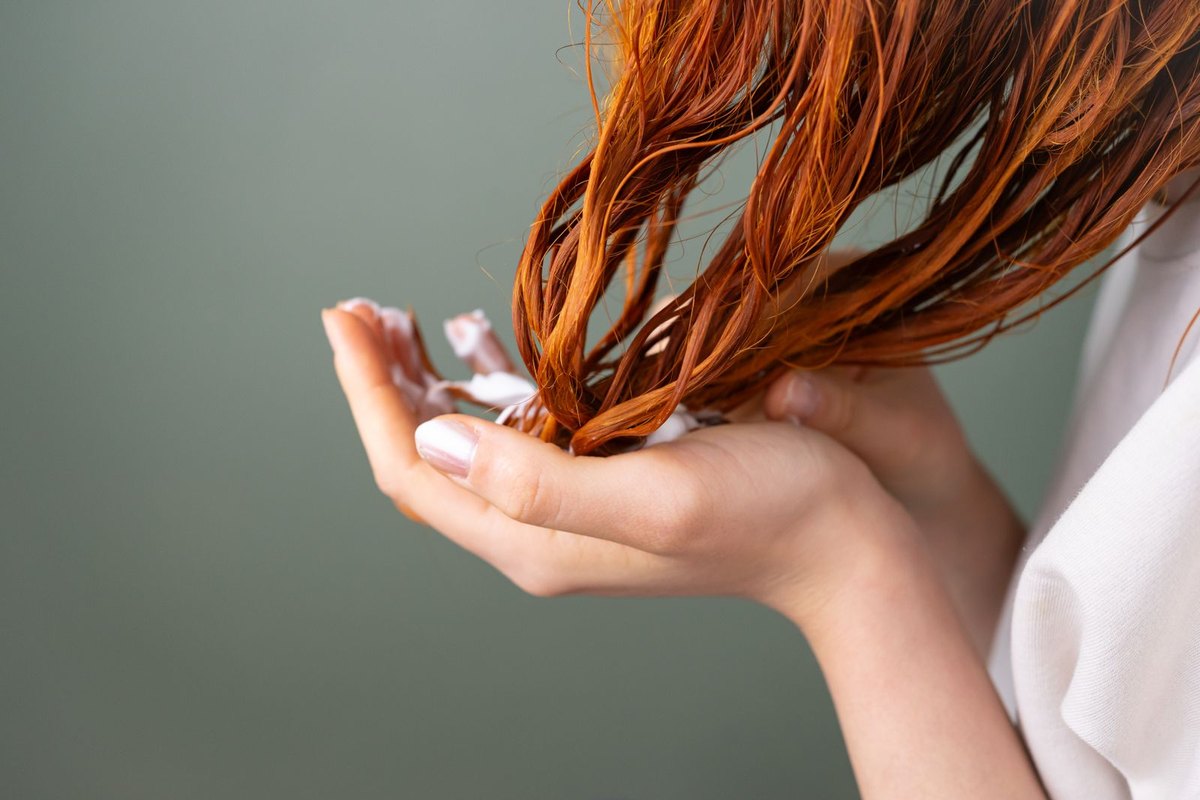
Apply it to soaking wet hair, not towel-dried hair
Conditioner needs water to spread. On curly hair — where every strand is coiled against its neighbours — applying to damp hair means it coats the outside of the clump and never reaches the middle.
Apply it in the shower, with the water still running off your hair. It should feel like it is diluting slightly as you work it in. That is correct.
Mid-length to ends. Never the roots
Your roots are already getting sebum. Adding conditioner there gives you flat, greasy roots and dry ends — the exact combination people then blame on the product.
Start at about ear level and work down. On tight coils you can go a little higher; on wavy hair, lower.
Detangle now, with the conditioner still in
This is the step most people do in the wrong place, and it is a real damage issue.
Wet hair is weaker than dry hair, and dragging a brush through bare wet curls applies tension to a fibre that cannot take it. Conditioner provides slip — it reduces the force needed to separate strands, sometimes dramatically.
So: conditioner in, then a wide-tooth comb or your fingers, from the ends upward, never root-down. The same principle applies to how you dry it and how you handle it in the salon chair — we cover the mechanics in why straightening damages hair.
Do not rinse it all out
This is the one that surprises people.
Rinsing curly hair until it “squeaks clean” removes the definition you just built. Leave a small amount in — enough that the hair still feels slightly slippery when you finish. That residue is what holds the curl clump together as it dries.
If your hair goes frizzy the moment it dries, over-rinsing is the first thing to change, before you change products.
Then do not touch it
Curls set as they dry. Every touch while damp breaks the clump and creates frizz. Squeeze with a microfibre towel or a cotton T-shirt, never rub with terry cloth, and then leave it alone.
If frizz is your main problem rather than curl definition, the drying half deserves more attention than the conditioner does — airflow direction alone changes the result. See Best Japanese Shampoo for Frizzy Hair.
Pairing: Match the Weight, Never Mix Light with Light
The rule that ruins the most curly-hair routines:
A light shampoo needs a heavier conditioner, not a lighter one.
A clarifying or lightweight shampoo strips more, so it needs more put back. Pairing light with light is the most common mistake curly shoppers make with Japanese products, because both bottles individually get good reviews — from people with straight hair.
| Your shampoo | Pair it with |
|---|---|
| Milbon Moisture Replenishing | Milbon conditioner — matched pair |
| &Honey Deep Moist | &Honey conditioner — matched heavy routine |
| Shiseido Tsubaki | Tsubaki Premium EX treatment |
| A clarifying formula like Ichikami | Not a light conditioner. Go to &Honey or Milbon |
Our curly hair shampoo guide covers the shampoo half of each pairing.
Finishing: The Optional Third Step
Rinse-out conditioner defines the curl. If your ends still look dull once dry, a small amount of oil on the ends after washing seals them.
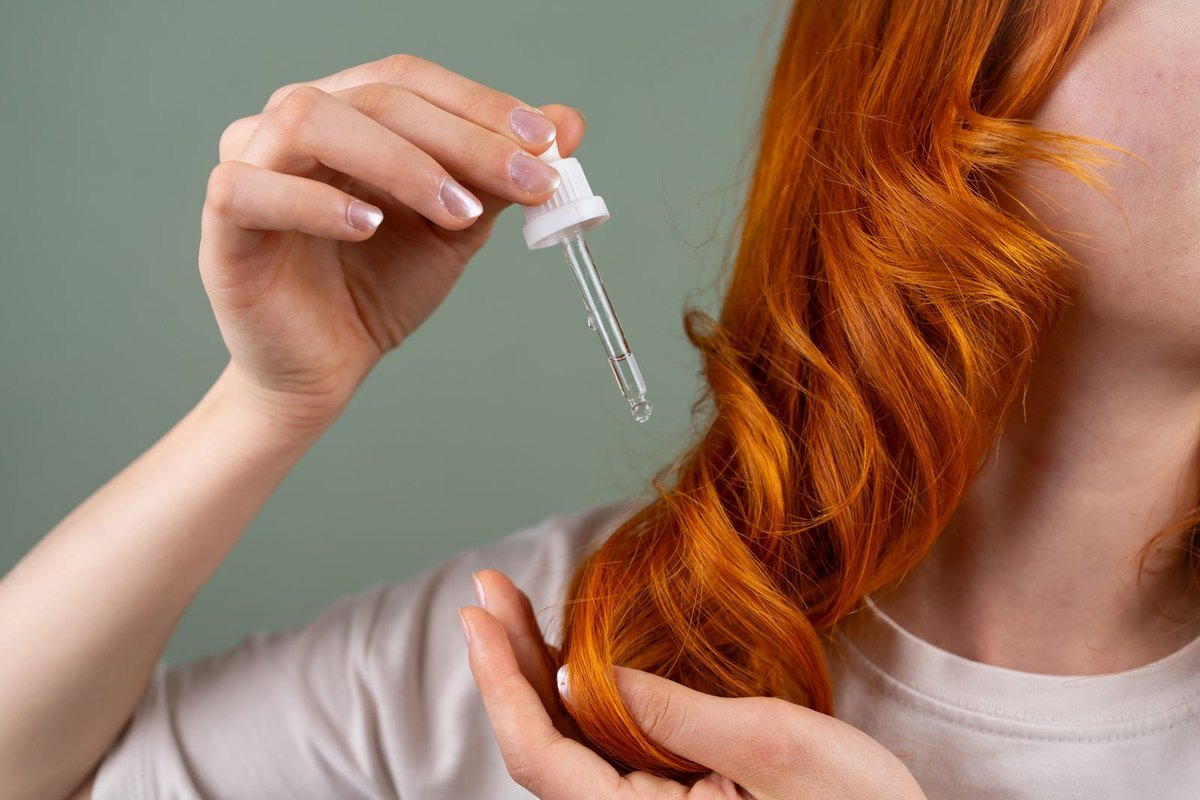
&Honey Deep Moist Hair Oil is the natural match if you are already using the &Honey pair. Two or three drops, ends only, on damp hair. More than that and you are back to weighed-down curls.
This step is optional. Get the conditioner and the technique right first.
Where this sits in the whole routine: conditioner ranks second, behind the dryer and ahead of the shampoo. The full order — and the two things you should not buy Japanese — is in Japanese Curly Hair Products.
FAQ
Do I need the matching conditioner, or can I mix brands? You can mix, but match the weight. Japanese brands formulate pairs so the conditioner counterbalances what that specific shampoo removes, which is why matched pairs are the safer default for curly hair.
How much conditioner should I use? More than you think. Curly hair uses two to three times what straight hair does, and under-application is more common than over-application. If it does not feel slippery as you comb through, you have not used enough.
Can I leave conditioner in overnight? Not a rinse-out one — it is not formulated for it and you will wake up weighed down. Use a mask like Fino for five to ten minutes instead.
My curls went limp after switching. What happened? Too heavy for your pattern, or you applied at the roots. Try applying lower down first before changing products — that fixes it more often than a new bottle does.
Is a hair mask the same as a conditioner? No. A mask is a weekly deep treatment; a conditioner is a daily rinse-out. The mask does not replace the conditioner, and using a mask daily will flatten curls within a week.
What about sulfate-free? Sulfate-free matters on the shampoo side, not the conditioner. If you want to change that half of the routine, see our sulfate-free guide.
Does the dryer matter for curly hair? Yes, more than for straight hair — heat and airflow both disturb the curl clump. Our dryer guide covers diffusers and why lower heat with faster drying wins on textured hair.
The Bottom Line
- Most curls, safe answer → Milbon Moisture Replenishing Conditioner
- Tight coils, very dry → &Honey Deep Moist Conditioner 2.0
- Curly and damaged → Tsubaki Premium EX Intensive Repair Treatment
- Once a week, on top → Fino Premium Touch Hair Mask
And then the four things that cost nothing:
Soaking wet, not damp. Mid-length down, never the roots. Detangle with it in, from the ends up. Do not rinse it all out.
Get those right and a mid-range conditioner outperforms a salon one applied badly.
For the shampoo half of the routine, start with our Japanese shampoo for curly hair guide.
About the author
Mori spent eight years as a licensed hairdresser — two in Shanghai at the Isetan salon, six in Tokyo — specialising in Japanese hair straightening (shukumo kyosei). He no longer works behind a chair but still holds the licence, and lives in Japan.
This article is based on professional knowledge of hair and formulation, plus aggregated customer reviews. It does not claim personal testing of every product. More about how this site works →